Red stone, enormous sky and a silence that settles in your chest. The American Southwest rewards the traveler who arrives with time, and a very good guide.
Written by Richard Garcia, Writer and content verifier · Researched by Robert Johnson · Published 14 November 2026
A Landscape That Slows You Down
Some places are seen. The American Southwest is felt. Stand on a mesa at dawn and the rock turns from violet to copper to gold, and for a few minutes nobody speaks. You will not need to be told to put your phone away.
This is a region of vast distances and very small moments: a hummingbird at a canyon spring, the smell of juniper after rain, a table set for two on the edge of a gorge. Done well, it is among the most restorative journeys in North America.
Sedona: Where the Desert Exhales
Sedona sits among red sandstone formations in central Arizona, and it has long drawn travelers who want stillness. Begin here. Spend your mornings on a private sunrise hike with a naturalist guide, your afternoons at a spa that draws on local clay and desert botanicals, and your evenings at a resort terrace watching the cliffs glow.
- Private guiding: Geology, Indigenous history and desert ecology, told by someone who knows the trails by heart.
- Hot air balloon at dawn: A quiet drift over the red rocks, with a champagne breakfast on landing.
- Jeep and helicopter options: For those who want to reach the corners few visitors see.
The Grand Canyon, Without the Crowds
Almost everyone has an image of the Grand Canyon in mind. Almost no one is prepared for the real thing. It is a mile deep and up to 18 miles across, and the light changes every few minutes. The National Park Service publishes current conditions, closures and seasonal guidance, which we always review before shaping a plan.
The South Rim is the most accessible, and the best way to meet it is early. Arrive before the day buses, walk a quiet stretch of the rim trail, and return for sunset from a viewpoint your guide has chosen for the season. Those who want more can add a private helicopter flight, or a river experience on the Colorado with a licensed operator.
Utah's Red Rock Country
Cross into Utah and the scale shifts again. Arches, Canyonlands, Zion and Bryce each offer a different mood, from sculpted stone bridges to hoodoos lit like cathedral spires. Moab makes a refined base for Arches and Canyonlands, with boutique lodges and chef-led dining that surprise first-time visitors.
For travelers who care about heritage as much as scenery, the region is also deeply Indigenous. Monument Valley, Canyon de Chelly and Bears Ears are the ancestral homelands of Native nations, and the National Geographic travel pages offer thoughtful background reading before you go. Where possible, we arrange visits led by Native guides, so your understanding comes from those whose stories these are.
When to Go
- March to May: Mild days, wildflowers and cool nights. An excellent window for walking.
- June to August: Hot in the low desert. Best for the high plateau and early mornings only.
- September to November: Golden light, settled weather and fewer visitors. Our favorite season.
- December to February: Snow on the rims, crisp skies and quiet trails. Pack layers.
The Brand USA travel portal is a useful companion for entry requirements and regional overviews as you plan.
How We Would Shape It
Ten days is a generous rhythm. Fly into Phoenix, spend three nights in Sedona, two at the Grand Canyon, and three or four in southern Utah, finishing in Las Vegas or Salt Lake City for a comfortable departure. We would match you with a private driver-guide who stays with you throughout, and we would balance big days with unhurried ones.
- Stay: Small, design-led lodges with outstanding dining and direct access to the landscape.
- Move: Private vehicles, scenic flights and a few well-chosen drives.
- Pause: Spa afternoons, stargazing evenings and a sunset picnic with nobody else around.
The night sky deserves its own mention. Across much of the Southwest, the stars are clear enough to cast shadows. Your guide can set up a telescope and tell you which of those bright points are planets.
Antelope Canyon, Page and Monument Valley
Page, in northern Arizona, is the gateway to Lake Powell and Antelope Canyon, where sunlight falls in shafts through the sandstone walls. Guided tours into the canyon are run by Navajo guides, and they must be booked in advance, often months ahead for the most popular times. Monument Valley, on the Navajo Nation, is a landscape of towering buttes that appears in many films. A private guide from the Navajo Nation shares the history of the land and the families who live there, and a sunset visit is a memorable way to see the valley.
Zion and Bryce Canyon
Zion National Park, a few hours from Las Vegas, is known for its towering red cliffs and the Narrows, a river walk between high canyon walls. Bryce Canyon, further east, is famous for its hoodoos, rock pillars that glow in the early morning and at dusk. Both parks suit a private itinerary, with early starts, guided walks and a comfortable lodge at the end of each day.
Questions travelers ask
When should I visit the Grand Canyon?
Spring and autumn are the most comfortable seasons. Summer is very hot in the lower areas, and winter can bring snow to the rim, though the views are beautiful.
Do I need a permit to visit Antelope Canyon or Monument Valley?
Both sites are on Navajo land and are visited with licensed Navajo guides. Booking ahead is essential, and we can arrange the right tour for you.
How do I travel between these places?
A private car with an experienced driver is the most practical way to cover the distances. Driving times between parks are long, so plan one or two bases rather than many short stops.
Horseshoe Bend, Lake Powell and the Colorado River
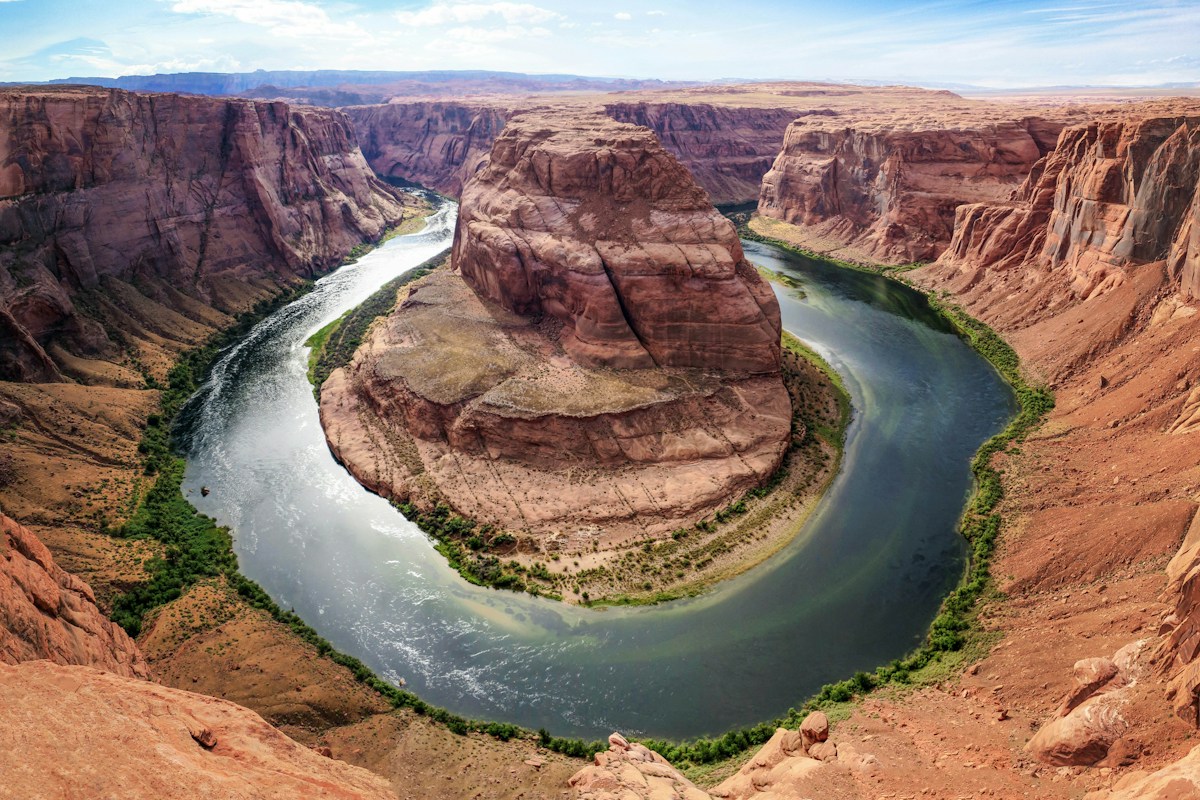
Horseshoe Bend, near Page, is a sharp loop of the Colorado River carved deep into the rock, and the view from the rim is one of the most photographed in the American West. Arrive before sunrise to see the river in soft light, and bring water and sun protection, as the trail is exposed. Lake Powell, nearby, is a reservoir of blue water among red cliffs, and a private boat trip into its side canyons is an unforgettable way to see the desert from the water.
Hiking and Stillness in the Desert
The Southwest rewards those who walk slowly. In Sedona, trails wind through juniper and red rock to quiet viewpoints, and a guided hike with a local naturalist adds the geology and the plants. Early starts avoid the heat in summer, when temperatures in the lower desert can be very high. Evenings bring cooler air and a clear sky, with stars that feel close enough to touch.
Questions travelers ask
Are the trails safe in summer heat?
Walk early in the morning or late in the day during summer, carry plenty of water and avoid exposed trails at midday. A local guide can advise on routes that suit the conditions.
Do I need a car in the Southwest?
Yes. Distances are long and public transport is limited. A private car with an experienced driver gives you flexibility to visit the parks and smaller towns.
Is this journey suitable for families?
Yes. Many of the parks and trails suit families, and private guides can adjust the pace and the length of each walk.
Begin with a Blank Page
Every journey we design is built from scratch around you. If the red rock country is calling, tell us your dream, and we will shape the rest.