Taiwan sits at the intersection of Chinese tradition and Japanese influence, shaped by both and reducible to neither — a country where extraordinary food, dramatic landscapes, and genuine warmth converge in ways that consistently exceed expectations.
Written by the Explorify specialist team · Published 24 September 2026
What Makes Taiwan Different
Taiwan sits at the geographic and cultural intersection of Chinese tradition and Japanese influence, shaped by both and reducible to neither. Its capital, Taipei, is one of Asia's most liveable cities — a place of extraordinary food culture, efficient infrastructure, and a warmth of welcome that travelers consistently describe as among the most genuine in the region. Beyond the city, a compact island of remarkable landscape variety unfolds: marble gorges, volcanic peaks, high-altitude tea plantations, and a Pacific coastline of genuine drama. Taiwan is not a single destination. It is a layered one, and it rewards the traveller who gives it more than a few days.
The Taiwan Tourism Administration has invested significantly in developing the country's international profile in recent years, but for most visitors from Europe and the Americas, Taiwan remains the unexpected discovery rather than the planned destination. The gap between its reputation and its reality is one of the largest in Asian travel — and the travelers who close that gap consistently tell us it was one of the best decisions they made.
Taipei: One of Asia's Great Eating Cities
Taipei's food culture is the first thing almost every visitor mentions, and the superlatives are justified. The city holds more Michelin-starred restaurants per capita than most comparably sized cities in Asia, alongside a street food and night market culture of extraordinary depth. Din Tai Fung's original flagship in the Da'an district has generated global replicas that are very good. The original — where the xiao long bao are assembled in a glass-walled kitchen you can watch while you wait — is something else entirely.
The night markets of Taipei — Shilin, Raohe, Ningxia — are genuine neighborhood institutions where three generations of the same family may have operated the same stall for fifty years. A private evening food tour through Ningxia Night Market — smaller and more local than Shilin, organized around Taiwanese rather than tourist preferences — is one of the best single evenings available in Asian urban travel.
Taipei's cultural institutions repay serious attention. The National Palace Museum holds the largest collection of Chinese imperial artefacts in the world — bronzes, jade, ceramics, calligraphy, and paintings assembled by successive dynasties — and a single day is genuinely insufficient. The museum's Jadeite Cabbage and Meat-shaped Stone are the most visited objects; the painting and calligraphy galleries, less crowded and more demanding of prior context, are where the collection reveals its deepest qualities.
Taroko Gorge: Taiwan's Natural Masterwork
Three hours south of Taipei by train, Taroko National Park contains one of the most dramatic natural landscapes in Asia. The Liwu River has cut through the Central Mountain Range over millions of years to create a marble gorge of towering vertical walls — in places less than ten meters wide at the base — extending nineteen kilometers into the interior. Walking the Zhuilu Old Trail, carved into the gorge face at a height that delivers vertiginous views across marble cliffs to the river far below, is one of the great single-day hikes in the region.
The park covers over 920 square kilometers and includes mountain peaks exceeding 3,700 meters. The Qingshui Cliffs on the park's Pacific coast — where sheer marble walls drop directly to the ocean — represent a scale of scenery that explains why Taiwan's indigenous Truku people regarded these mountains as sacred in the most immediate possible sense.
Sun Moon Lake and the Tea Country
In the geographic center of Taiwan, Sun Moon Lake occupies a high-altitude basin in the mountains of Nantou County — a lake of extraordinary clarity whose name describes its shape: the eastern portion circular like a sun, the western indented like a crescent moon. The lakeside hotels and retreat properties here, several offering private water access and traditional Taiwanese breakfast on terraces across the morning mist, represent some of the finest rest-and-recovery accommodation in Asia.
The high-mountain tea country of Alishan produces some of the most celebrated oolong teas in the world — grown at altitudes between 1,000 and 2,600 meters in conditions that create a floral, complex character unique to Taiwan. A private tasting at a family-run mountain farm — poured by someone who can trace the cultivation method through three or four generations — is a very different experience from a café menu.
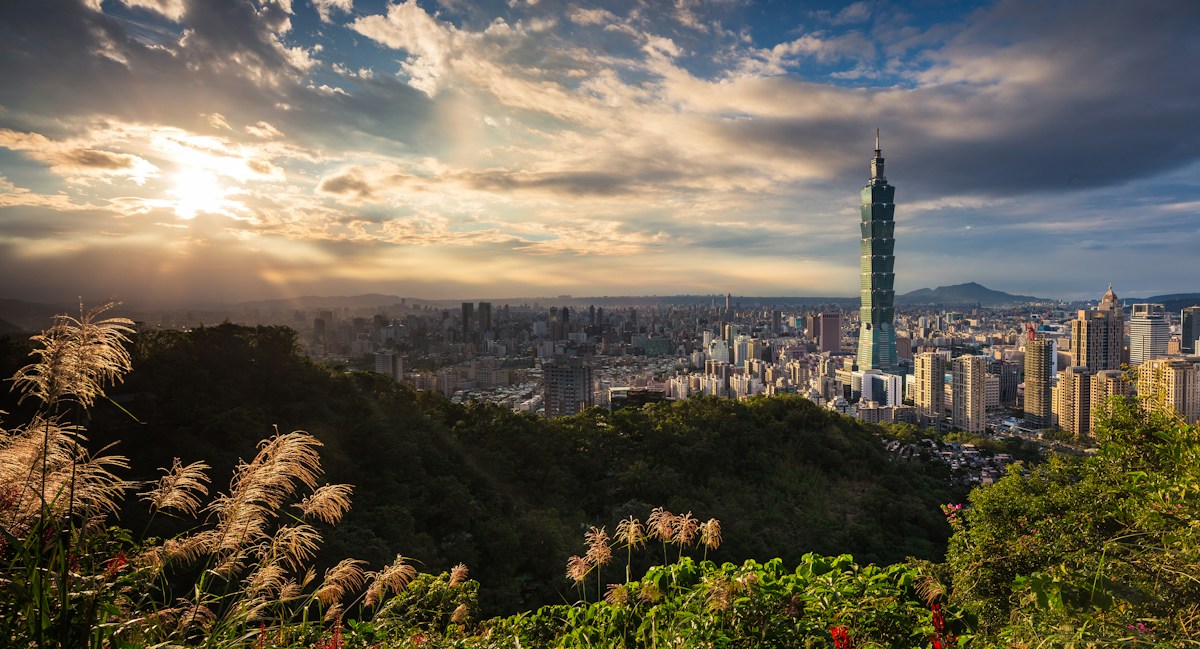
- Taipei: Two to three nights; Old Quarter walking, National Palace Museum, night market evenings, Elephant Mountain for the skyline at dawn.
- Taroko Gorge: One to two nights based in Hualien; the gorge walk, Qingshui Cliffs, and the Pacific coastal highway.
- Sun Moon Lake and Alishan: Two nights; lake mornings, mountain tea tastings, sunrise at the famous Alishan Forest Railway viewpoint.
For travelers designing a Taiwan journey that combines Taipei's cultural energy with the gorge, the lake, and the tea country — and potentially extends to Tainan's historic south — our Asia specialists are ready to build the itinerary around your specific interests and travel pace.