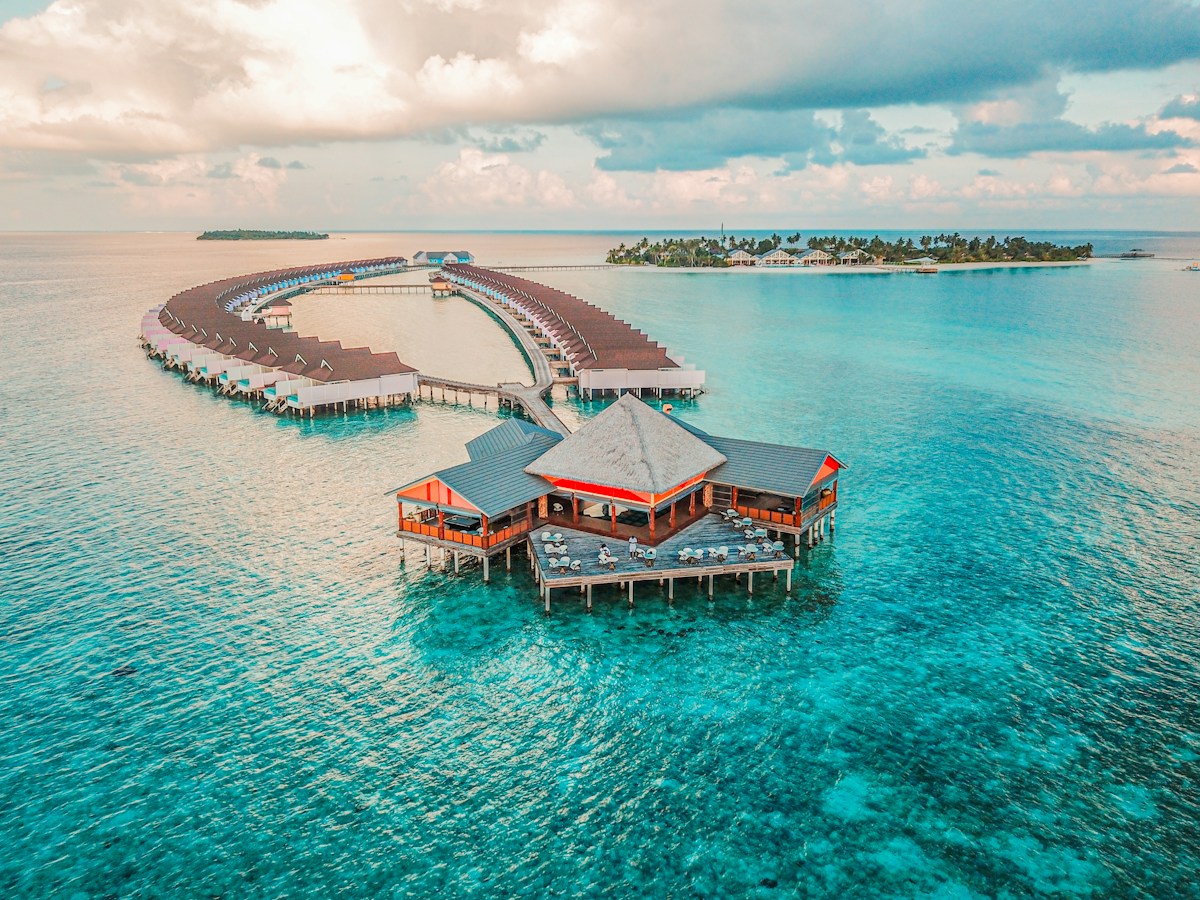
Every resort in the Maldives promises overwater villas and turquoise water — but the 1,200 islands spread across 26 atolls deliver very different experiences, and choosing the wrong one changes everything.
Why the Maldives Is Not One Place
The brochure version of the Maldives is familiar: a plank of bleached wood extending over water so clear you can count the fish below. It is accurate as far as it goes. But the Maldives is an archipelago of roughly 1,200 islands arranged across 26 atolls, stretching nearly 900 kilometres from north to south. The resort you choose, and the atoll it sits within, shapes the entire character of your trip — the marine life you encounter, the transfer you endure to get there, the wind patterns you contend with, and whether your week feels like a private discovery or a well-staffed production line of luxury experiences.
The Maldives Tourism Authority provides useful entry-point information, but it cannot tell you which atoll suits you specifically. That requires knowing what you actually want from the water, from your mornings, and from the people around you — or, ideally, not around you.
North and South Malé Atolls: Convenient, Established, and Always in Demand
For most travellers, the journey begins with a speedboat transfer from Velana International Airport in Malé. The North and South Malé Atolls sit closest to the capital and are home to some of the most recognisable resorts in the world. Transfer times run from 20 minutes to just over an hour, which means less time in transit and more flexibility with international flight connections. If you are arriving on a late flight and want to be in your villa before midnight, North Malé delivers.
The trade-off is that these atolls are among the most visited. The reef snorkelling and diving are excellent — several of the best dive sites in the country are accessible here — but the sense of solitude varies considerably between resorts. Choosing the right property within a busy atoll matters as much as choosing the atoll itself. A resort with 50 villas on a longer island will feel very different from one with 100 villas on a compact sandbank, even if they share the same postal code.
- Best for: Short trips (five to seven nights), honeymooners wanting easy access, travellers combining Maldives with another destination
- Transfer time: 20–60 minutes by speedboat
- Notable for: Consistent dive conditions year-round, proximity to Malé for day excursions
Baa Atoll: UNESCO Biosphere Reserve and the Manta Congregation
Baa Atoll carries UNESCO Biosphere Reserve status, and for good reason. Its shallow, nutrient-rich lagoon at Hanifaru Bay is one of the world's most significant feeding sites for manta rays and whale sharks — during peak season from June to November, aggregations of hundreds of mantas have been recorded in a single session. It is a genuinely remarkable natural event, and for ocean-focused travellers it alone justifies the atoll choice.
Getting to Baa requires a 30-minute domestic flight from Malé followed by a speedboat transfer — a more involved journey than the closer atolls, but not a hardship by any measure. The resorts here tend to attract guests who have done a Malé-atoll trip before and are ready to go further. The coral health is exceptional, and the sense of discovery is proportionally greater.
- Best for: Marine life enthusiasts, repeat Maldives visitors, those with at least seven nights to spend
- Transfer time: 30-minute domestic flight + speedboat
- Season highlight: June to November for manta and whale shark aggregations at Hanifaru Bay
The Southern Atolls: For Travellers Who Want to Disappear
Addu, Huvadhoo, and the cluster of atolls in the far south of the archipelago represent a different proposition entirely. Seaplane services do not reach these latitudes — access requires a domestic flight of up to 90 minutes, followed by a transfer. The resorts here are fewer, smaller, and deliberate in their positioning. You do not end up in the southern atolls by accident.
What you find is a Maldives that has not been smoothed by decades of mass luxury tourism. House reefs are frequently in near-pristine condition. The underwater topography in Huvadhoo Atoll, in particular, includes channels with consistently strong current that attract pelagic species — hammerhead sharks, dolphins, large schools of reef fish — that more trafficked sites rarely see. For serious divers, this is the frontier.
The WWF has documented the importance of these southern waters to regional marine biodiversity, and the relative absence of boat traffic helps explain why the ecosystems here feel different in kind, not merely in degree.
For travellers ready to invest in the journey, the southern atolls deliver an intimacy that no North Malé resort — however beautiful — can match. If you are planning a Maldives escape and want a conversation about which atoll fits your travel dates, diving interests, and tolerance for transfer time, our team is here to help you choose.