Oman made a deliberate choice to develop slowly and preserve what was already there — the result is a Gulf country whose landscape, culture, and sense of unhurried welcome feel entirely unlike anywhere else in the region.
Written by the Explorify specialist team · Published 24 September 2026
The Gulf Country That Chose a Different Path
Oman made a deliberate choice that distinguishes it from every other Gulf destination: to develop slowly, to preserve what was already there, and to build a tourism infrastructure consistent with the landscape and culture it sits within rather than in contrast to them. The result is a country whose skyline does not compete with the mountains behind it, whose old town quarters have not been replaced by replicas of themselves, and whose desert — the Wahiba Sands in the east, the vast Rub' al Khali extending south — remains exactly as immeasurable as it has always been.
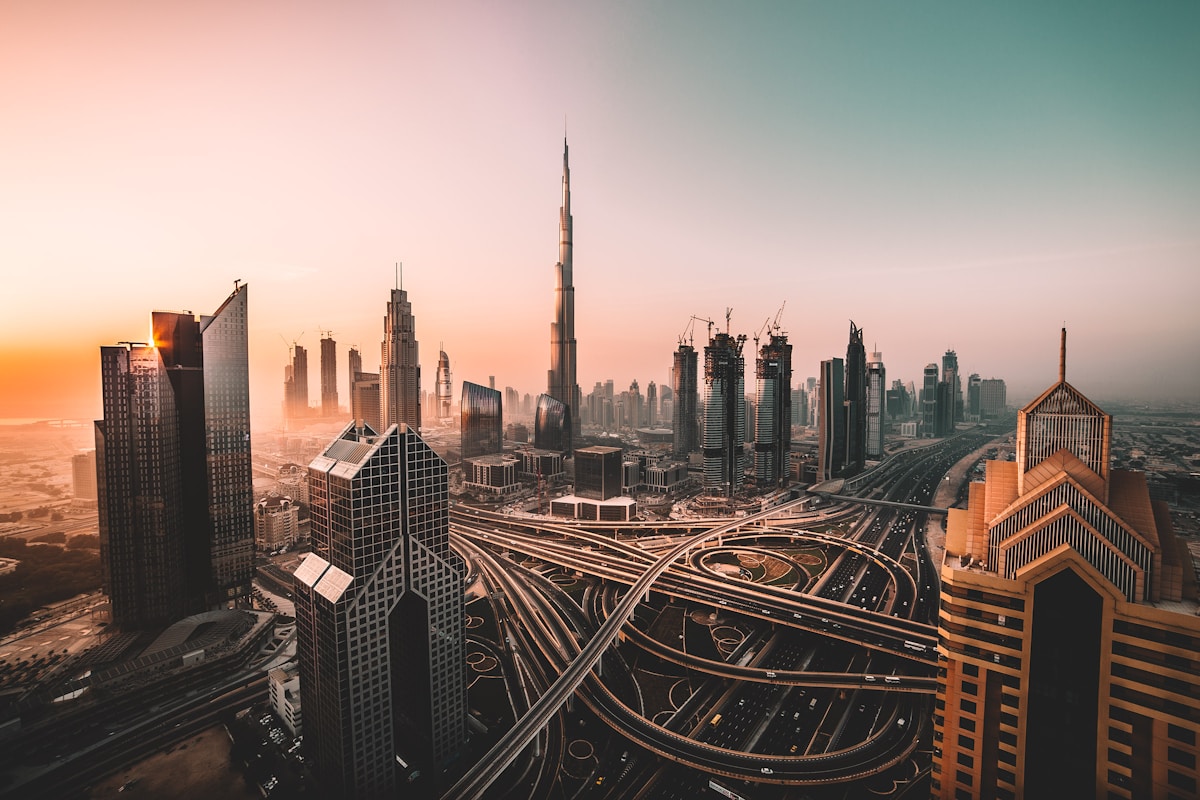
Muscat, Oman's capital, is one of the most architecturally coherent cities in the Middle East. A long-standing building height regulation has kept the city low and white, its buildings blending into the rocky Hajar Mountains behind rather than rising above them. Arriving in Muscat from Dubai or Doha feels like stepping out of a speed that you had forgotten you were inside. The Oman Ministry of Heritage and Tourism has carefully managed visitor growth to protect both the country's cultural fabric and its natural environments — a policy that maintains the quality of the experience for those who do come, and that makes Oman feel, even now, like a discovery.
Muscat: Grand Mosque, Ancient Souq, and the Mountains Behind
The Sultan Qaboos Grand Mosque is one of the great works of Islamic architecture in the contemporary world. Completed in 2001 and capable of accommodating 20,000 worshippers, it is distinguished not by scale alone but by craftsmanship: the hand-knotted Persian carpet in the main prayer hall is among the largest in the world, its 28 colors produced from natural dyes; the chandelier above weighs fourteen tonnes. Visiting with a specialist guide who can explain the theological and architectural choices embedded in the building's design — the use of Omani marble, the symbolism of the geometric patterns — transforms a remarkable building into a comprehensible one.
The Mutrah Souq, along the corniche of Muscat's old port district, is one of the most authentic trading souqs remaining in the Gulf — a covered labyrinth of silver jewelry, khanjar daggers, frankincense, rosewater, and Omani textiles that functions as a genuine commercial market rather than a heritage recreation. The Corniche itself, in the early morning before the heat builds, is the best introduction to Muscat's character: a wide seafront promenade between the mountains and the Sea of Oman, dhows in the harbour, and a city that moves at a pace the rest of the Gulf abandoned some years ago.
Nizwa and the Hajar Mountains: Oman's Ancient Interior
Two hours from Muscat, the Hajar Mountains rise to over 3,000 meters — the highest peaks in eastern Arabia — and the interior city of Nizwa sits at their foot, a former capital of Oman whose round tower fort and Friday livestock market are among the most atmospheric historical sites in the country. The UNESCO-listed Aflaj irrigation systems of the Hajar foothills — ancient underground water channels directing mountain groundwater across the arid valley floor to date palm plantations and settlement gardens — represent one of the most sophisticated pre-modern water engineering systems in the world, still operating as a daily practical reality centuries after they were built.
The mountain road from Nizwa to Jebel Shams — Oman's highest peak, and the rim of a canyon the Omanis call the Grand Canyon of Arabia — delivers a landscape of such geological drama that it reframes expectations entirely. The Jebel Akhdar plateau, the Green Mountain, takes travelers through ancient terraced rose gardens — the source of Oman's famous rose water — at an altitude that keeps temperatures tolerable even in summer.
Wadi Shab and the Wahiba Sands
The wadis of Oman's eastern region — seasonal riverbeds that hold permanent pools of turquoise mountain water in their deepest recesses — are among the most purely pleasurable natural environments in the Gulf. Wadi Shab, south of Muscat on the coastal road toward Sur, requires a short boat crossing and a three-kilometer walk through a gorge of increasing drama to reach its inner pools: clear, cold, turquoise water at the foot of walls so vertical that sunlight reaches the water only at midday. Swimming into a cave behind a waterfall — the final moment of the Wadi Shab walk — is one of the most unexpectedly joyful experiences in Middle Eastern travel.
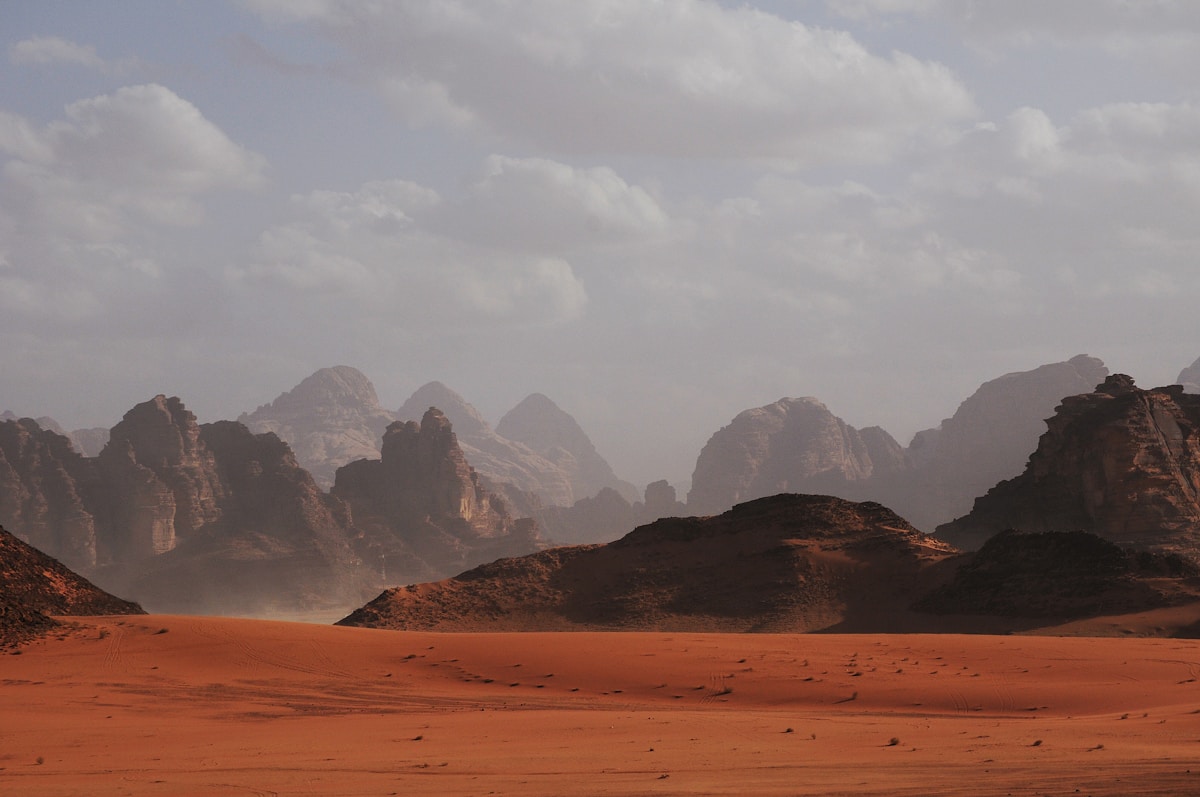
The Wahiba Sands — an accessible desert of genuine scale, dunes up to 100 meters high in deep red and amber, stretching 180 kilometers to the Arabian Sea — deliver the desert experience at its most essential. Overnight camps positioned in the interior dunes rather than at the tourist fringe offer silence at sunset, a sky so dense with stars that the horizon loses definition, and the extraordinary morning calm of a landscape in which nothing moves.
- Muscat: Two nights; Grand Mosque, Mutrah Souq and Corniche, day trip to the Royal Opera House and the capital's waterfront.
- Nizwa and the mountains: Two nights; the fort and souq, Jebel Akhdar rose gardens, Jebel Shams canyon rim at sunset.
- Wahiba Sands: One to two nights in the desert; dune driving, camel riding, star-filled evenings at a private desert camp.
For travelers ready to explore Oman in depth, or to combine it with a broader Gulf itinerary that extends to the Musandam Peninsula and its dramatic fjords, speak with our Gulf specialists about designing a journey that reveals the country at its full depth.