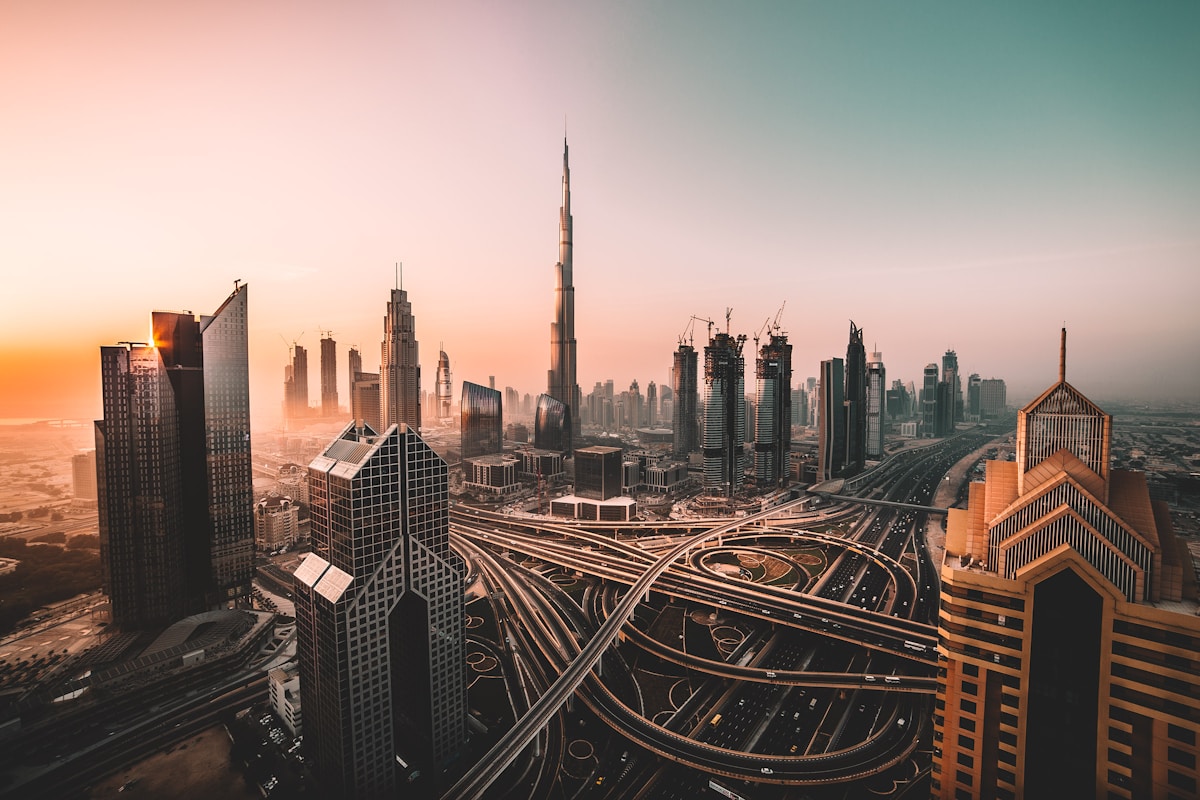
The UAE most travelers see is extraordinary in its own right — but the country behind the skyline, in the desert, the heritage souks, and the quieter northern emirates, is where the journey truly begins.
Written by the Explorify specialist team · Published 22 September 2026
The Dubai You Haven't Seen Yet
Dubai occupies a specific place in the travel imagination: towers of glass and steel rising from the desert, man-made islands, ski slopes inside shopping centers, and an ambition — occasionally breathtaking, occasionally vertiginous — to build faster and taller and more spectacularly than anywhere else on Earth. That Dubai is real, and parts of it are genuinely extraordinary to witness. But it is not the whole story, and for travelers who stop there, the risk is leaving having seen the performance without understanding the place.
The UAE is a country of significant depth: a desert landscape of extraordinary beauty, a pearl-diving and trading history that predates the oil era by centuries, a cultural life that has attracted some of the world's finest museums, and a hospitality tradition — the genuine warmth of Emirati welcome — that exists quite separately from the luxury hotel industry that has grown up around it. Understanding both versions, and the country beyond Dubai's city limits, transforms a stop into a destination.
Old Dubai: The City Before the Skyline
The creek that divides Dubai into Deira and Bur Dubai was the city's original heart — a working waterway where abras (traditional wooden ferries) still cross for a dirham, and where the gold and spice souks along Deira's north bank have been operating continuously since the early twentieth century. The Al Fahidi Historical Neighbourhood, in Bur Dubai, preserves the wind-tower architecture of pre-oil Dubai in a series of restored courtyard houses that now contain the Dubai Museum and a cluster of small galleries and cultural foundations.
The contrast between standing in Al Fahidi's courtyard — surrounded by coral and gypsum walls built before the city's first skyscraper was imagined — and looking up to see the Burj Khalifa two kilometers away is one of the most visually arresting juxtapositions in modern travel. The Dubai Tourism Authority has invested significantly in the preservation and accessibility of Old Dubai in recent years, and the result is a heritage precinct that rewards half a day of unhurried exploration on foot.
A private walking tour through Al Fahidi, across the creek by abra, and through the gold souk at dawn — before the heat builds and the crowds accumulate — is one of the best mornings available in the Gulf region, and one that the majority of Dubai's visitors never take.
The Desert: Where the UAE Reveals Itself
An hour from Dubai's skyline, the city dissolves into the Hajar Mountains and the great sand seas of the Empty Quarter. The Rub' al Khali — the largest continuous sand desert on Earth — begins in the south of Abu Dhabi's emirate and extends across Saudi Arabia, Oman, and Yemen. The dune systems accessible within the UAE's own borders deliver the full experience of a landscape that operates on a scale entirely different from the built environment of the coast.
A private desert camp — not the organized bedouin dinner experiences marketed through hotel concierges, but a genuinely remote camp in the dunes with a specialist guide and a night sky unobstructed by any artificial light — is among the most surprising experiences the UAE offers. The silence of the desert after sunset, and the quality of the stars at this latitude, are things no amount of coastal city can replicate.
The UNESCO-listed Aflaj irrigation systems of the Al Ain oasis — ancient underground water channels that have sustained communities in the interior for thousands of years — are among the most undervisited heritage sites in the Gulf. The city of Al Ain itself, an hour and a half from Dubai, provides the clearest picture of the UAE's pre-oil culture, and its livestock market offers a glimpse of a social and commercial life entirely distinct from the coast.
Abu Dhabi: Culture and Quieter Waters
Abu Dhabi, the UAE's capital, operates at a meaningfully different pace from Dubai. The Sheikh Zayed Grand Mosque — one of the largest in the world, its marble and hand-knotted carpet of extraordinary quality — is one of the most beautiful buildings in the Gulf, and access with a private guide who can explain its cultural and architectural significance transforms a tourist visit into something considerably more meaningful.
The Louvre Abu Dhabi, in its Jean Nouvel building on Saadiyat Island, houses a permanent collection that traces connections between world civilizations in a way that feels genuinely surprising rather than institutional. The museum district developing around it — including the forthcoming Guggenheim Abu Dhabi — represents one of the most ambitious cultural investments in the modern Gulf.
The Northern Emirates: The Road Less Travelled
The northern emirates — Ras Al Khaimah with its Hajar Mountain trekking and mangrove kayaking, Fujairah on the Indian Ocean coast, Sharjah with its restored heritage area and extraordinary collection of Islamic museums — reward travelers willing to move beyond the Dubai–Abu Dhabi axis and encounter an older, quieter, and arguably more authentic Gulf.
- Ras Al Khaimah: Via ferrata in the Hajar Mountains, desert glamping, and a coastline facing the Gulf of Oman rather than the Arabian Gulf — genuinely different in character from the southern emirates.
- Fujairah: The UAE's only emirate on the Indian Ocean coast, with a historic fort, traditional fishing villages, and dive sites in some of the clearest water in the Gulf of Oman.
- Sharjah: The UAE's most atmospheric heritage quarter and the finest collection of Islamic art and architecture in the country — 45 minutes from Dubai, rarely visited by its guests.
If the UAE is part of your journey — whether as a standalone destination or in combination with Oman's Musandam peninsula and interior — speak with our Gulf specialists about designing a trip that shows you both the extraordinary city built in fifty years and the landscape and culture that existed long before it.