Malaysia is one of Southeast Asia's most underestimated destinations — a country where a UNESCO heritage city, an Andaman island retreat, and one of the world's last intact rainforests sit within an hour's flight of each other.
Written by the Explorify specialist team · Published 22 September 2026
Why Malaysia Rewards More Than a Transit Stop
Malaysia sits between Singapore and Thailand on every traveller's mental map of Southeast Asia — a place most people fly over or through, rarely deliberately into. Those who stop discover a country of startling variety: one of Asia's most compelling food cities in Penang, a string of island resorts in Langkawi that compete seriously with Thailand's finest, rainforest interiors in Borneo that shelter wildlife found nowhere else on the planet, and a cultural complexity — Malay, Chinese, Indian, and indigenous traditions woven together across centuries — that takes time to understand and rewards that time generously.
The Tourism Malaysia authority describes the country as Truly Asia, and the compression is surprisingly accurate. Nowhere else in the region delivers the same breadth of experience in such geographic proximity. Singapore to Penang is a one-hour flight. Penang to Langkawi is under an hour more. Kuala Lumpur to Kota Kinabalu in Sabah, Borneo, takes less than two hours. A well-designed Malaysian itinerary moves through multiple entirely distinct worlds within a single trip.
Penang: Asia's Greatest Food City, and a Lot More
George Town, Penang's capital, is a UNESCO World Heritage Site — a living city of shophouses, clan jetties, Chinese temples, Indian mosques, and colonial British architecture that has accumulated over centuries without ever being fully rationalised or replaced. Its preservation reflects not a government program but a simple fact: the community never left. George Town's residents lived in their shophouses through the twentieth century, and the result is a heritage city that feels inhabited and evolving rather than curated and frozen.
But what brings most of the world's attention to Penang is the food. The claim that George Town is Asia's greatest eating city is contested — Singapore makes the same argument, as does Taipei — but Penang's case rests on a tradition of hawker culture developing in the same streets for over a century and a half. Char kway teow, asam laksa, Hokkien mee, nasi kandar — these are not variations on regional dishes. They are the originals, evolved in Penang's particular cultural crucible to flavour profiles that cannot be fully replicated anywhere else.
A private food tour through George Town — moving between hawker stalls in the early morning, clan association teahouses at midday, and a Peranakan nyonya cooking class in the afternoon — is one of the best single-day itineraries in Southeast Asian travel. An overnight stay at one of Penang's heritage boutique hotels, converted from Chinese merchant shophouses in the heart of the conservation area, completes a day fundamentally different from anything available in the region's more polished city destinations.
Langkawi: Malaysia's Most Accomplished Island Retreat
Langkawi is an archipelago of 99 islands in the Andaman Sea, set within a UNESCO Global Geopark of ancient limestone mountains, mangrove forests, and protected marine habitat. The main island has been developed carefully enough that its best resorts — positioned on private stretches of beach, set within tropical gardens or perched on hillside sites with sea views — deliver a seclusion that the more developed Thai islands increasingly struggle to offer.
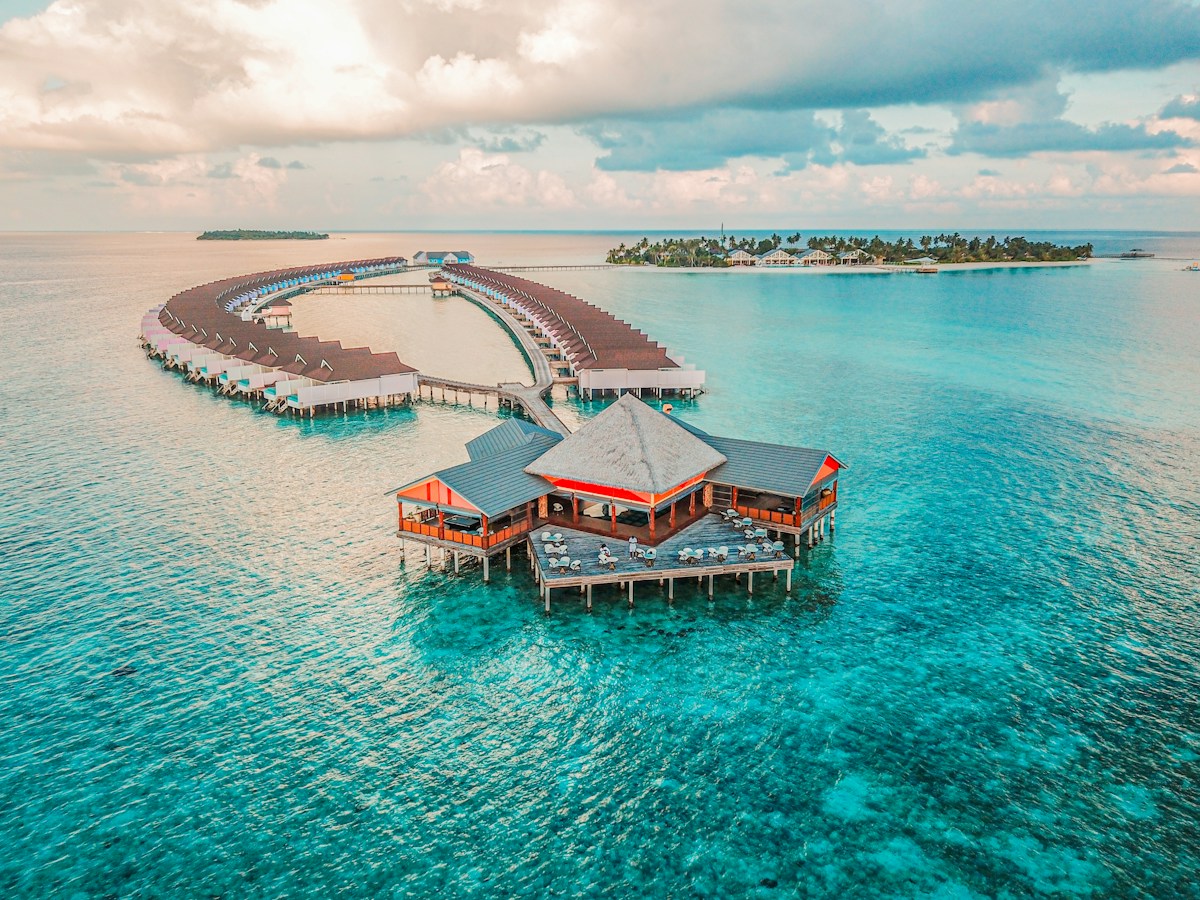
For travelers who want the overwater villa or private-pool-beach experience without the Maldives' transfer complexity and pricing, Langkawi positions itself as one of the most compelling alternatives in the entire region. The surrounding 99-island archipelago offers snorkelling sites, deserted beaches, and the extraordinary mangrove ecosystem of Kilim Karst Geoforest Park — navigable by private vessel at your own pace.
- Datai Bay: Positioned within a rainforest reserve on the northwest coast, home to one of Southeast Asia's most acclaimed nature-integrated resort properties.
- Tanjung Rhu: A long stretch of white sand in the north of the island with some of Langkawi's finest boutique properties and exceptional sunsets across to the Thai coast.
- Island hopping by private boat: Your own vessel, your own pace — the archipelago delivers on its own terms and not according to a group tour schedule.
Borneo: The Journey Worth the Extra Flight
Malaysian Borneo — the states of Sabah and Sarawak on the world's third-largest island — represents one of the last intact tropical rainforest ecosystems on Earth. Sabah is home to Mount Kinabalu, the highest peak in Southeast Asia, and to the Kinabatangan River, one of the world's most biodiverse waterways: pygmy elephants, proboscis monkeys, and one of the highest concentrations of wild orangutans in existence, accessible on private river cruises that move through forest so dense the canopy blocks the sky.
The WWF has worked extensively in Borneo to document and protect its extraordinary biodiversity, and the best conservation-integrated lodges in Sabah and Sarawak are active participants in that work. Choosing them means your presence contributes directly to the habitat that makes the experience possible.
For travelers combining a Malaysia journey with a few days in Singapore at the start, a Penang and Langkawi passage in the middle, and Borneo's wild interior at the close, the regional itinerary that emerges is one of the most diverse and deeply rewarding in Southeast Asian travel. Speak with our Asia specialists about designing yours from scratch.