Portugal combines one of Europe's oldest capitals, a wine culture that rivals its neighbours, and a rural interior of extraordinary beauty — and it rewards those who take the time to move through it slowly.
Why Portugal Still Surprises the Most Travelled Guests
There is a particular pleasure in a destination that continues to exceed your expectations even when those expectations are already high. Portugal is that place. It combines extraordinary cultural depth — Lisbon is one of the oldest capital cities in Europe, predating Rome by centuries according to local legend — with a landscape of remarkable variety, a wine culture that rivals France and Spain without the accompanying price premiums, and a warmth of welcome that feels entirely genuine rather than curated for tourism.
The Turismo de Portugal authority describes the country as one destination with many faces, and that compression, for once, is accurate. The Atlantic coast and the Mediterranean interior are separated by less than two hours' drive but feel like different countries entirely. A well-designed Portugal itinerary moves between them deliberately.
Lisbon: A Capital on Its Own Terms
Lisbon does not behave like other European capitals. It is quieter than you expect, more intimate in scale, organised across seven hills with a light — particularly in the late afternoon, when the Atlantic haze catches the white façades of the old Moorish quarter — that painters and photographers have been chasing for centuries. The city rewards slow exploration: narrow streets in the Alfama, the ancient castle district, lead to viewpoints (miradouros) with views across the Tagus river and the terracotta rooftops of the old city below.
The food scene in Lisbon has transformed significantly over the past decade. The city now hosts a serious collection of Michelin-starred restaurants alongside exceptional neighbourhood tasca restaurants serving traditional Portuguese cuisine — salt cod prepared in dozens of ways, slow-braised pork, pastéis de nata from the original Pastéis de Belém bakery — at prices that feel almost implausibly good for a Western European capital.
For accommodation, the choice between a converted palace hotel in the Chiado district and a designer boutique property in the creative LX Factory neighbourhood comes down to whether you want Lisbon's history wrapped around you or its creative present. Both are worth considering; many travellers choose one for arrival and the other for their final nights.
The Alentejo: Portugal's Best-Kept Secret
East and south of Lisbon, the Alentejo unfolds across rolling plains of cork oak, olive trees, and vine-covered hills that produce some of the most characterful wines in Europe. This is rural Portugal at its finest — unhurried, beautifully undiscovered by mass tourism, and home to a handful of exceptional wine estate hotels (herdades and quintas) that rank among the finest rural retreat properties on the continent.
- Évora: A UNESCO World Heritage city of Roman temples, medieval walls, and cathedral towers rising from the plains. Compact and extraordinarily well-preserved.
- Monsaraz: A walled medieval village perched on a hilltop above the Alqueva reservoir — one of Europe's largest artificial lakes — offering kayaking, stargazing in one of Europe's designated Dark Sky reserves, and sunsets over the water that guests describe for years afterward.
- Wine estate stays: The Alentejo's herdades — private wine estates with guest accommodation — offer cellar tours, private vineyard tastings, farm-to-table dining, and the deep quiet of the Portuguese countryside that is increasingly rare on the continent.
The Douro Valley: Vineyards, Quintas, and the River
In the north, the Douro Valley cuts through the oldest demarcated wine region in the world — port wine territory, regulated since 1756, its terraced slopes a landscape so dramatic that UNESCO recognised the entire valley as a World Heritage Site in 2001. This is a landscape shaped entirely by human hands: hundreds of years of terracing on impossibly steep schist slopes, each terrace holding the vines that produce port, Douro reds, and the increasingly celebrated white wines that have transformed the valley's reputation well beyond port alone.
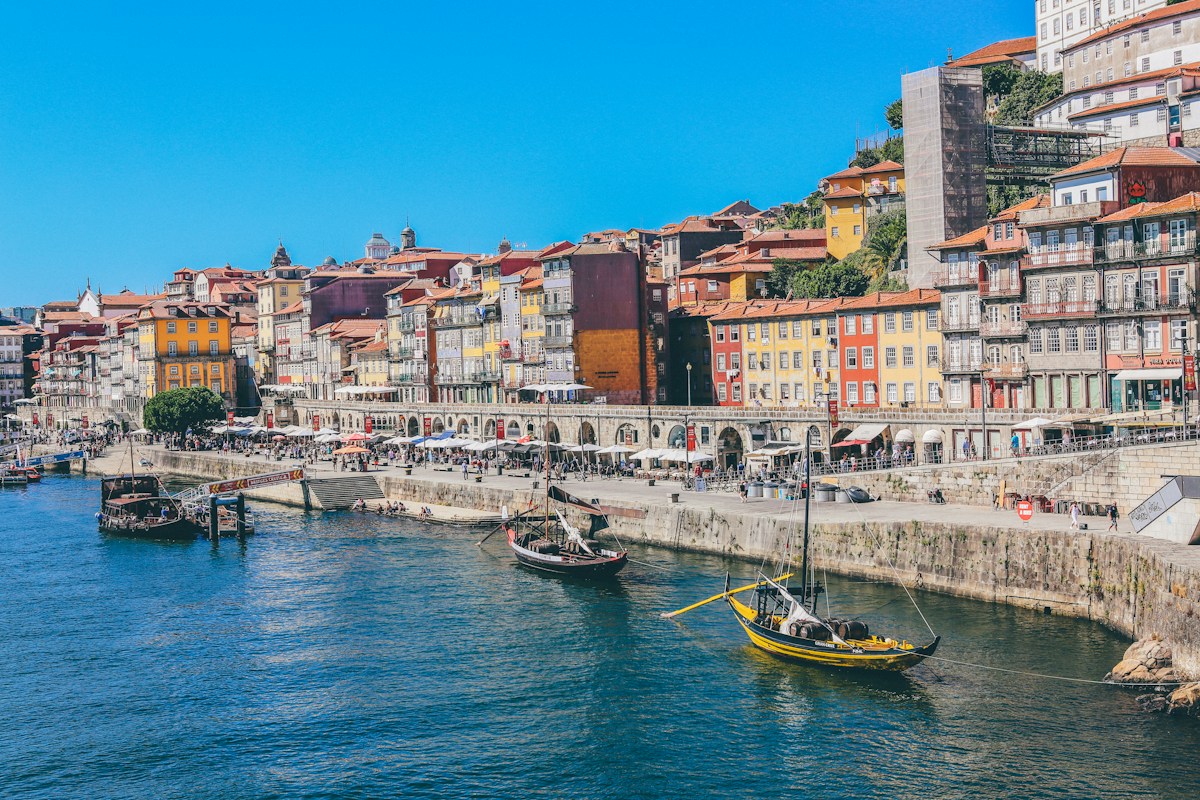
The experience of travelling the Douro — whether by private river cruise, by road from quinta to quinta, or by the historic train that follows the river from Porto — is one of the great journeys in European travel. Porto itself, at the valley's mouth, is a city of extraordinary character: the Ribeira district along the riverfront, the azulejo-tiled façades, the rabelo boats on the water, and the port wine lodges across the river in Vila Nova de Gaia, where tasting cellars that have been in operation for centuries open their doors to visitors.
When to Go and How to Move Through Portugal
Portugal's Atlantic position means it avoids the extremes of the Mediterranean summer — temperatures in Lisbon and the Alentejo in July and August are warm but rarely oppressive, and the coast provides relief within easy reach. Spring (April to June) is ideal for the Alentejo in bloom and Lisbon at its most comfortable. Autumn delivers the harvest season in the Douro, when the vendima fills the air with the smell of crushed grapes and the quintas host their finest tastings of the year.
A private Explorify Portugal journey typically runs eight to twelve days, moving south to north — Lisbon and the Alentejo first, then Porto and the Douro Valley. Each section operates at its own pace, with private guides, tastings arranged directly with estate owners, and accommodation chosen for its position within the landscape. If Portugal is where your next journey begins, our European specialists are ready to design it from scratch.