From Kraków's medieval grandeur to the Tatra Mountains' alpine drama and Warsaw's extraordinary cultural renaissance — Poland rewards travellers who look beyond the obvious.
Poland is one of Europe's most consistently underestimated destinations. Travellers who arrive expecting a post-communist utilitarian landscape leave having encountered one of the continent's richest cultural histories, some of its most beautiful medieval architecture, a cuisine in the middle of a serious renaissance, and a countryside of extraordinary variety — from the High Tatra peaks on the Slovak border to the amber-strewn Baltic coast in the north.
Kraków: The Cultural Capital of Central Europe
Kraków's Old Town is a UNESCO World Heritage Site and one of the best-preserved medieval city centres in Europe — largely because the city was spared the destruction that levelled Warsaw during the Second World War. The Royal Castle on Wawel Hill, the vast Cloth Hall market square, St. Mary's Basilica with its hourly bugle call: these are not reconstructions. They are the originals, intact and lived-in.
The Kazimierz district — Kraków's historic Jewish quarter — has become one of Central Europe's most vibrant urban neighbourhoods, with independent restaurants, boutique hotels converted from old townhouses, and a gallery scene that punches well above the city's size. The Wieliczka Salt Mine, a UNESCO site 14 kilometres from the city centre, descends nine levels into an underground world of carved chapels, salt sculptures, and illuminated chambers — one of the most unusual and memorable experiences in all of Poland.
Warsaw: A City Rebuilt from Nothing
Warsaw was systematically destroyed during the Second World War — over 85% of the city razed to rubble. What stands today is an act of collective will: the Old Town was meticulously reconstructed from 18th-century paintings by Bernardo Bellotto, stone by stone, to its pre-war appearance. That rebuilt Old Town is now itself a UNESCO World Heritage Site, testament to the extraordinary effort of reconstruction.
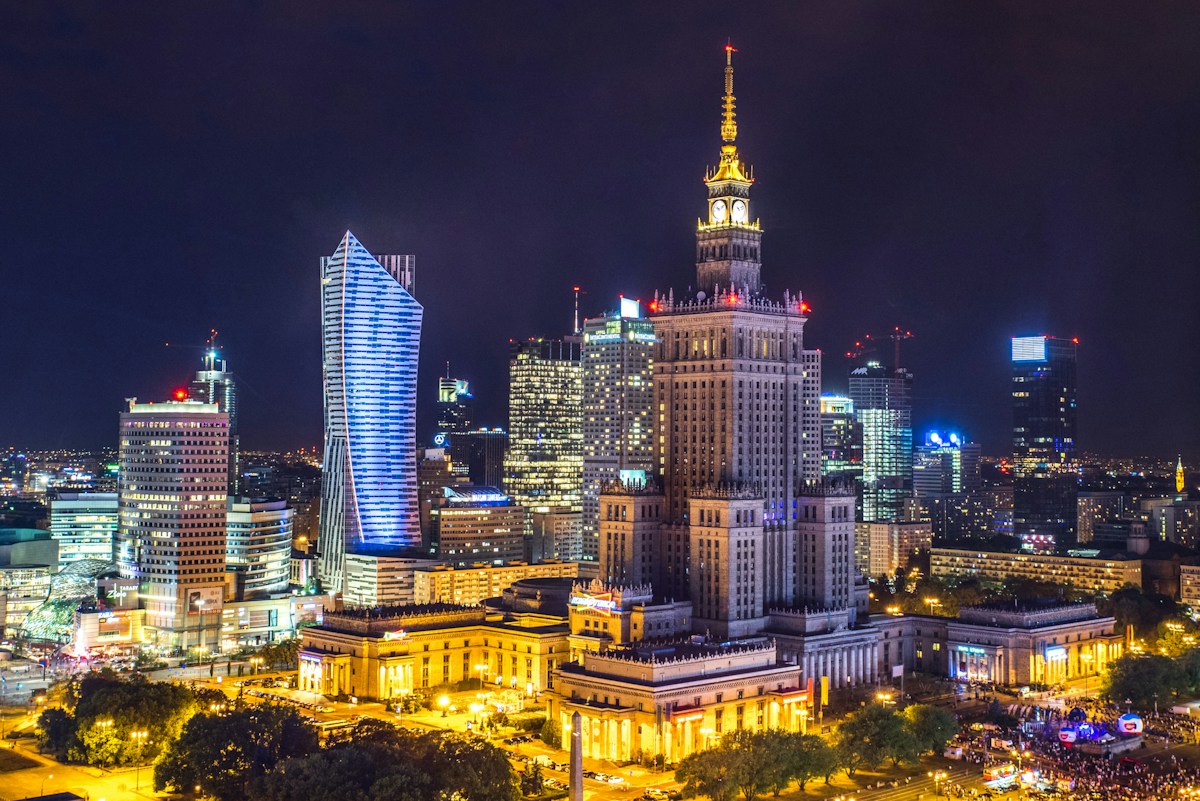
Contemporary Warsaw is one of Europe's most dynamic capital cities — its restaurant scene competing seriously with Prague and Vienna, its museum culture (the POLIN Museum of the History of Polish Jews and the Warsaw Uprising Museum are among the finest in Europe) of genuine world class, and its energy entirely its own. The Polish Tourism Organisation describes Warsaw as a city in permanent reinvention — that is exactly right.
The Tatra Mountains: Poland's Alpine Heartland
The High Tatras straddle the border between Poland and Slovakia, rising to nearly 2,500 metres above the spa town of Zakopane. This is the Polish highlands — a region with its own distinct culture, architecture (the wooden Zakopane Style, with its steeply pitched roofs and ornate carved details), cuisine (oscypek, the smoked sheep's cheese, is ubiquitous and addictive), and mountain traditions that have been preserved through centuries of relative isolation.
In winter, Zakopane is Poland's skiing capital, with slopes that attract serious skiers from across Central Europe. In summer, the same mountains offer trekking routes of genuine alpine quality, with trails to glacial lakes — Morskie Oko, the Eye of the Sea, is the most famous — and ridge walks with views across three countries. The Tatry National Park protects the entire Polish side of the range.
Gdańsk and the Baltic Coast
Gdańsk is one of Europe's great merchant cities — its Long Lane and Long Market lined with tall, gabled townhouses in the Hanseatic style, its amber workshops producing the jewellery for which the Baltic coast has been famous since antiquity. The city sits at the mouth of the Vistula river where it meets the Baltic Sea, and its maritime history — including its role as the birthplace of the Solidarity movement that helped end communist rule across Eastern Europe — gives it a depth of story that few comparable European cities can match.
The Hel Peninsula, a narrow sand spit extending 35 kilometres into the Baltic, is one of Poland's most distinctive landscapes: dunes, pine forests, fishing villages, and the open sea on both sides. Sopot, between Gdańsk and Gdynia, is Poland's most elegant seaside resort — its wooden pier, the longest in the Baltic, and its Grand Hotel have been drawing summer visitors since the 19th century.
When to Go and How to Travel
Poland rewards travel in every season. Spring (April to June) brings blossom and long days to Kraków and Warsaw at their most beautiful. Summer is peak season for the Baltic coast and the Tatras. Autumn turns the Bieszczady mountains in the southeast deep gold and amber. Winter in Kraków, with its Christmas markets and snow-dusted rooftops, is one of Europe's most atmospheric seasonal experiences.
A private Explorify Poland itinerary typically combines Kraków with a day trip to Wieliczka and the nearby Auschwitz-Birkenau Memorial, Warsaw's cultural highlights, and either the Tatras or the Baltic coast depending on the season and your interests. Private guides, boutique hotels in converted aristocratic townhouses, and access to the country's finest regional cuisine make the difference between visiting Poland and actually understanding it.
Speak with our European travel specialists to begin designing your Polish journey — a country that consistently surprises even the most widely travelled clients.