A quiet climb through bamboo and mist ends in the company of a silverback. Here is what to know about permits, seasons and where to rest in Rwanda's volcano country.
Written by the Explorify specialist team · Published 12 October 2026
A Hush in the Bamboo
The forest is cool and green. Mist hangs between the trunks. Your guide lifts a hand, and the whole group goes still.
Somewhere ahead, a branch breaks. Then a deep, slow exhale. You have walked for hours to reach this moment, and it arrives without ceremony. A silverback sits in the leaves, entirely at ease, entirely himself.
This is gorilla trekking in Rwanda. It is quieter than you imagine. It is also more moving than almost anything else you will do with a journey.
Where the Gorillas Live
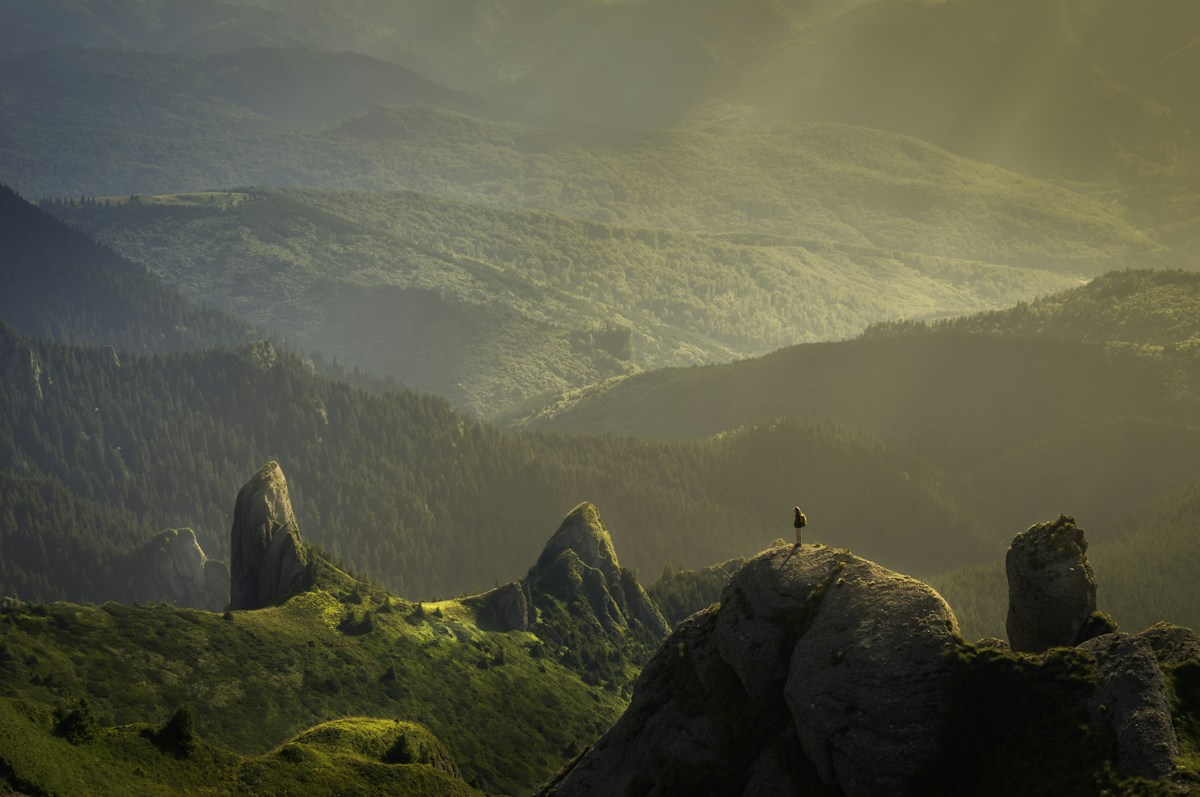
Rwanda's mountain gorillas live in Volcanoes National Park, in the northwest of the country. The park sits on the slopes of the Virunga volcanoes, shared with neighbouring Uganda and the Democratic Republic of Congo. The terrain is steep, wet and richly forested. Bamboo gives way to giant heather, and the air thins as you climb.
The gorillas are habituated, which means they have grown accustomed to the gentle presence of people over many years. Researchers, trackers and guides visit each family daily. The families are named, known and watched over. That daily attention is part of why the species has survived, and why your visit matters.
Few places on Earth let you sit this close to a great ape in the wild. Rwanda does it with rare discipline.
Understanding Gorilla Permits
Every trek begins with a permit. There is no way around this, and no reason you would want one. Permits are issued by the Rwanda Development Board, and they are deliberately limited. Only a small group of visitors may spend time with each gorilla family each day. The limit protects the animals. It also protects the quality of your hour with them.
A few things are worth knowing:
- Permits are limited and allocated for specific dates. They are tied to a particular day, so your wider itinerary is built around them, not the other way around.
- Your time with the gorillas is brief by design. Visitors typically spend about an hour once the family is found. It is long enough to feel like a lifetime.
- There is a minimum age for trekking. Children under the permitted age cannot take part, which matters if you are traveling as a family.
- Permit rules, availability and costs change. Explorify confirms current details when designing your journey, so you are never working from an out-of-date figure.
The important point is timing. Popular months fill early. If you know you want to go, it helps to begin the conversation well ahead of your dates.
The Best Seasons to Go
Gorillas live in the mountains all year, and trekking runs through every season. What changes is the ground beneath your boots.
The drier months are generally June to September, with a second, shorter dry spell around December and January. Paths are firmer. Skies are clearer. Views across the volcanoes are at their sharpest. These are the most popular windows for good reason.
The wetter months are generally March to May and again in the later part of the year. The forest turns lush and dripping. Trails can be muddy and steep. But the crowds thin, the light is soft, and the gorillas often feed lower on the slopes, which can mean a shorter walk to reach them.
Neither is wrong. It depends on whether you value certainty underfoot or solitude in the green. Rain patterns shift from year to year, so Explorify checks current conditions with our contacts on the ground before settling a date.
What the Trek Is Really Like
You begin early. At park headquarters, guides assign you to a gorilla family based on your pace and preferences. Trackers have already gone ahead at dawn to locate the group. You follow by radio and by instinct.
The walk can take an hour or most of a day. It depends on where the family chose to rest. You climb through farmland first, then a low stone wall, then forest. Porters are available, and we encourage you to use one. It supports local families, and it lightens the climb.
When you reach the gorillas, you leave your bags and your walking sticks behind. You carry only your camera. Then you sit, and you watch. A juvenile tumbles through the undergrowth. A mother settles an infant against her chest. The silverback considers you, then looks away. You are not the main event here. You are simply allowed in.
Wear sturdy boots, long sleeves and gloves. Keep your voice low. Your guide will tell you how to behave, and it is worth following every word.
Where to Stay
The region around Volcanoes National Park offers a small number of exceptional lodges, as well as a handful of more intimate private retreats. Some sit just beyond the park boundary, with volcano views from the terrace. Others are tucked into the hills and gardens nearby.
What matters is not a rating. It is proximity to your trailhead, the quality of the guiding, the warmth of the staff and the comfort of the bed after a long climb. A fire at the end of the day matters more than you might expect.
Every lodge, guide and experience we recommend has been personally visited and vetted by our team. We do not suggest a place we have not slept in. So when we place you somewhere near the volcanoes, we can tell you what the morning light looks like from your room, how far the drive is to the starting point, and what the staff will do when you return muddy and elated.
Beyond the Gorillas
Rwanda rewards those who stay longer. Many travelers pair the gorillas with a second experience, and the country makes it easy.
- Lake Kivu offers calm water, quiet shores and a gentle way to rest tired legs after the mountains.
- Nyungwe Forest is one of Africa's oldest rainforests, home to chimpanzees and a rich variety of other primates, with canopy walkways above the trees.
- Akagera National Park brings a classic savannah safari in the east of the country, a very different landscape from the volcanoes.
For travelers who want to meet gorillas in more than one setting, Uganda offers its own forests and its own distinct experience. Our guide to gorilla trekking in Rwanda versus Uganda explores how the two compare. Many journeys also continue on to Kenya for a savannah chapter after the forest.
How to Prepare
You do not need to be an athlete. You do need to be willing. The terrain is uneven, and the altitude can make the climb feel longer than it looks. A little fitness before you travel goes a long way.
Pack light layers, waterproofs and a good pair of broken-in boots. Bring a camera that works well in low light, because the forest is shaded and the gorillas rarely pose. Leave flash at home. Your guide will brief you on how to keep a respectful distance, and on what to do if you feel unwell.
Above all, give the experience room. Do not rush it with a tight schedule on either side. The best encounters happen when there is time to breathe afterwards.
Designing the Journey Around It
A gorilla trek is rarely the whole story. It is the heart of a journey, and the days around it shape how you feel when you arrive.
We think about how you travel in. We think about where you rest the night before, how early you need to start, and who is waiting at the other end. We arrange private transfers, a dedicated guide who knows your pace, and a journey specialist reachable around the clock while you are away. Nothing is taken from a catalog. Every detail begins as a blank page.
That is the difference between visiting Rwanda and truly being there.
Tell Us Your Dream
Perhaps it is a silverback in the mist. Perhaps it is a quiet lake after a long climb. Either way, we would like to hear it. Tell us your dream, and we will begin from there.